You Make Your Own Luck:
Lessons I Learned from the Pool Hall
The Green Felt University
Long before I got on the mat as a martial artist learning to fight strategically because,
“All things being equal, the bigger stronger guy will win.
So don’t be equal.”
Before I was a foreman working on multi-million and billion-dollar projects with guys who scored poorly on the emotional IQ exam, I was learning everything I needed to know to be successful in life on the pool table.
When I was in high school, I fell in love with the pool table.

It was the perfect balance of left and right brain thinking—the left brain calculating lasers and mirrors, the right brain feeling the humidity, flow, and energy of the room.
I grew up first with classic 8-ball where there was more luck than skill. But soon thereafter, I graduated to 9-ball and 3-cushion billiards, and we were playing for money.
You learn quickly when cash is on the line: if you don’t keep your emotions in check and think strategically, you’ll be walking home with empty pockets.
The pool hall became my classroom, and the lessons weren’t just about pocketing balls.
I learned you had to look ahead at least 3 shots BUT you had to focus intensely on the shot that was right in front of you.
I learned that if you let the idiots and assholes disrupt your concentration—coughing, making noises, or other psychological warfare—that was on you, not them. Your focus was your responsibility.
I learned about resource management: never bet more than 1/10th of what you had in your pocket (at least that was my rule) and never lose more than 1/3rd of your bankroll or else you’d start thinking more about the money and less about the game in front of you.
These were just some of the skills I picked up under the dim lights of the pool hall. I discovered you’re playing the person, not just the table. When it was your shot, it was just you and the felt—everything else had to disappear.
I learned it was better to go for a shot with confidence than to play defensive and leave control in your opponent’s hands.
I observed that women were naturally better at pool because they didn’t feel the need to slam the balls into the pocket—they’d finesse the shots with a touch most guys couldn’t match.
I recognized there were “no bank days” where the energy was funky, so you’d better not try anything fancy.
And I internalized the 80/20 Rule: only use English on the ball when you absolutely had to, and most of the time just rely on the angle and speed to position yourself for the next shot.
These rules became my playbook—first on the green felt, then on the mat, later on the jobsite, and ultimately in life.
What looked like luck to others was actually preparation meeting opportunity. I wasn’t just playing pool; I was learning how to create my own luck.
Chalking Up:
How to Create Your Own Luck in Life
What I discovered through thousands of hours at the pool table is that luck isn’t some mystical force that randomly blesses some people and curses others.
Luck is manufactured.
It’s engineered. It’s the result of careful planning, strategic thinking, and disciplined execution.
Let me break down the key principles I learned at the pool hall and how they apply to creating your own luck in every area of life:
1. Look Ahead But Stay Present
Pool Hall Principle: Plan three shots ahead while focusing completely on the current shot.
Life Application: Success requires both strategic foresight and present-moment execution. The most successful people in any field have a clear vision of where they’re going but maintain laser focus on the immediate task at hand.
Many people fail because they either:
- Get lost in future possibilities without executing today’s priorities
- Focus only on immediate tasks with no strategic direction
To create your own luck, develop the habit of setting aside time for strategic planning (your next three “shots”), then dedicating uninterrupted focus to your current priority.
Each morning, visualize your medium-term goals, then identify the single most important task that moves you toward them today.
2. Control Your Environment, Not Vice Versa
Pool Hall Principle: Don’t let distractions or mind games throw off your shot; your focus is your responsibility.
Life Application: External circumstances will always try to derail you. The difference between the “lucky” and “unlucky” is how they respond to these inevitable distractions.
Start by identifying your potential distractions:
- Digital interruptions (notifications, emails, social media)
- Energy vampires (negative people, complainers, drama creators)
- Environmental triggers (clutter, noise, disorganization)
Then implement concrete strategies to protect your focus:
- Technology boundaries (notification settings, airplane mode, digital sabbaticals)
- Relationship boundaries (limited time with negative people, clear communication)
- Environmental design (dedicated workspace, noise-cancelling headphones)
Remember: you can’t control others, but you can control your response. When someone tries to throw you off your game, recognize it as a test of your focus rather than a valid reason to fail.
3. Practice Intelligent Risk Management
Pool Hall Principle: Never bet more than 1/10th of your bankroll; never lose more than 1/3rd in one session.
Life Application: Luck favors those who stay in the game long enough to capitalize on opportunities. This requires smart risk management across all life domains:
Financial Risk Management:
- Maintain an emergency fund covering 3-6 months of expenses
- Diversify income streams (side hustles, investments, skills that transfer across industries)
- Follow the 5% rule: be careful to risk more than 5% of your total assets on any single investment
Career Risk Management:
- Continuously develop transferable skills that work across multiple industries
- Build a network before you need it
- Keep your resume and LinkedIn updated even when happily employed
Relationship Risk Management:
- Invest in multiple types of relationships (family, close friends, professional contacts)
- Regularly deposit into your “relationship bank accounts” before making withdrawals
- Know when to walk away from toxic relationships that drain more than they give
4. Play the Person, Not Just the Game
Pool Hall Principle: You’re playing the opponent, not just the table.
Life Application: Technical excellence alone rarely creates “luck.” Understanding human psychology and social dynamics is equally important.
Develop your emotional intelligence by:
- Studying nonverbal cues (facial expressions, body language, tone changes)
- Practicing active listening (listening to understand, not to respond)
- Mapping motivations (understanding what drives different personalities)
This human-centered approach creates “luck” in:
- Negotiations (identifying the other party’s true motivation vs. stated position)
- Leadership (inspiring discretionary effort from your team)
- Sales (addressing unspoken objections and desires)
- Relationships (preventing conflicts before they escalate)
5. Take the Shot

Pool Hall Principle: It’s better to go for a shot than play defensive and leave control in your opponent’s hands.
Life Application: Fortune favors the bold. While calculated risks are essential, excessive caution creates an illusion of safety while actually increasing risk over time.
The most “lucky” people:
- Apply for jobs they’re not 100% qualified for
- Share ideas before they feel completely ready
- Make decisions with 70% of the ideal information (not waiting for 100%)
- Ask directly for what they want rather than hoping it will be offered
Develop a bias toward action by:
- Setting artificial deadlines (if I haven’t decided by Friday, I’ll choose option A)
- Using the 5-second rule (count down from 5, then act before your brain creates excuses)
- Practicing micro-risk-taking daily (one small uncomfortable action each day)
6. Finesse Beats Force
Pool Hall Principle: Women excel at pool because they finesse shots rather than powering through.
Life Application: In most situations, precision and elegance outperform brute force. Creating your own luck means knowing when to:
- Ask thoughtful questions instead of making forceful statements
- Listen carefully rather than speaking louder
- Use influence rather than authority
- Apply minimal effective pressure rather than maximum force
This finesse approach works particularly well in:
- Difficult conversations (creating safety for honest dialogue)
- Conflict resolution (finding mutual interests rather than defending positions)
- Creative problem-solving (working with resistance rather than against it)
7. Recognize “No Bank Shot” Days
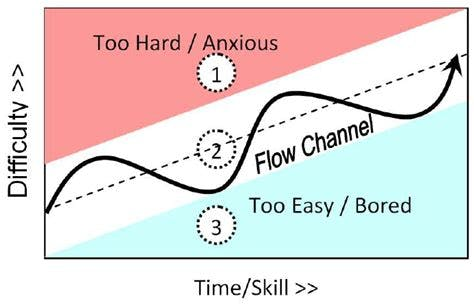
Pool Hall Principle: Some days, the energy is off, so avoid fancy shots.
Life Application: Even the “luckiest” people recognize when conditions aren’t optimal for certain types of actions.
Develop situational awareness by:
- Tracking your energy patterns throughout the day and week
- Matching task complexity to your energy levels
- Recognizing external factors that affect performance (team morale, market conditions)
Then adapt by:
- Rescheduling high-stakes activities when conditions improve
- Having backup plans for different energy states
- Creating systems that don’t rely on motivation or optimal conditions
8. Apply the 80/20 Rule Everywhere
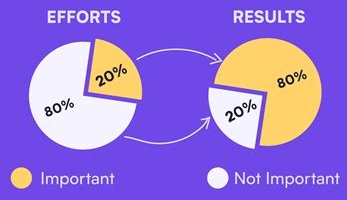
Pool Hall Principle: Only use English on the ball when necessary; rely on fundamentals most of the time.
Life Application: In any domain, 20% of inputs create 80% of outputs. The “luckiest” people identify and focus relentlessly on that critical 20%.
Apply this by:
- Identifying your highest-leverage activities and scheduling them first
- Ruthlessly eliminating or delegating low-value tasks
- Simplifying complex systems to their essential components
- Mastering fundamentals before pursuing advanced techniques
Remember: luck isn’t about complexity. It’s about executing the fundamentals with excellence and consistency.
Put It On the Mat:
Creating Your Luck Practice

Now comes the most important part—putting these principles into action.
Because knowing pool hall wisdom isn’t enough; you need to apply it consistently in your daily life.
Start by conducting a “Luck Audit.”
Rate yourself on a scale of 0-5 in each of these areas:
- Strategic Vision + Present Focus: How well do you balance long-term planning with present-moment execution?
- Focus Management: How effectively do you protect your attention from external distractions?
- Risk Management: Are you taking smart, calculated risks while preserving your core resources?
- People Intelligence: How well do you read, understand, and connect with others?
- Action Bias: Do you take shots or repeatedly play it safe?
- Elegant Execution: Do you apply finesse or rely on brute force?
- Situational Awareness: Can you recognize when conditions are favorable vs. unfavorable?
- 80/20 Focus: Are you concentrating on high-leverage activities or spreading yourself thin?
Any area with a score below 4 represents an opportunity to manufacture more luck in your life.
Select the ONE area with the lowest score and commit to a 30-day “Luck Practice” focused exclusively on that dimension.
For example, if your lowest score is in “Action Bias,” your 30-day practice might be:
- Take one meaningful risk every day (however small)
- Set a 24-hour decision rule for any choice you’ve been avoiding
- Create accountability by telling someone about the shot you’re going to take
Document your practice daily by answering three questions:
- What specific action did I take today to improve my [lowest-scored area]?
- What resistance or challenge did I encounter?
- What was the actual outcome versus my feared outcome?
After 30 days, retake your Luck Audit. You’ll likely see improvement not just in your focus area, but across multiple dimensions.
Remember, luck isn’t something that happens to you; it’s something you create through consistent practice of these principles.
Just as I didn’t become a pool shark overnight, you won’t transform your luck immediately.
But with deliberate practice, what others perceive as supernatural good fortune will simply be the natural outcome of your approach to life.
The pool hall taught me that the difference between winners and losers isn’t the cards they’re dealt—it’s how they play the hand. Some days the table plays fast, some days it plays slow. Some opponents are sharks, others are fish. But regardless of conditions, those who master these principles consistently create their own luck.
So chalk up your cue. Survey the table. Take a deep breath. And take your shot.
Because in the end, the luckiest people are those who never relied on luck in the first place.