The Danger of Simple Thinking: Why Life’s Not Just Right or Wrong
We were fighting again.
Not yelling. But that quiet kind of fight. The kind where your chest feels tight. The kind where silence is louder than words.
My wife and I have been married a long time. Over two decades. And still—some fights feel brand new. They sneak up on you.
This one was over something small. Maybe how we handled money that month. Or maybe it was about how we spoke to each other in front of friends. Honestly, I don’t even remember the topic.
What I do remember is the feeling.
I wanted to be right.
I wanted her to see my side.
And she wanted the same.
We were stuck. Like two sumo wrestlers locked in place, waiting for the other to fall.
But unlike on the mat, when I fight her… it hurts more. She’s not just my partner. She’s my teammate. My best friend. The person I chose to walk through life with. When we fight, it doesn’t feel like I’m winning anything. It feels like I’m losing something important.
That day, I stopped. I asked myself:
“What if we’re both right?”
It wasn’t easy. But it changed everything.
Life isn’t the dojo. It’s not win or lose.
It’s not just tap or don’t tap.
It’s much messier. Much more human.
And trying to apply simple thinking to something as deep and complex as a relationship? That’s a recipe for pain.
That shift—moving from simple thinking to deeper understanding—was one of the most powerful things I ever learned.
And it didn’t come from YouTube. Or a meme. Or a podcast.
It came from pain.
And two books that became my teachers.
The Lessons from Two Books
Let’s get something straight:
Simple thinking feels good. But it’s dangerous.
It makes you feel certain. It makes you feel like you know the answer. And in today’s world, that’s a high.
But here’s the catch: The world doesn’t run on simple answers.
Let me share something I learned the hard way:
There’s a quote I once read—can’t remember the source—but it said something like:
“You think you have the answer to a problem that’s more complex than you think, and your answer is too simple to solve it.”
That hit me like a gut punch.
Because that’s what I did for years.
When my wife and I would argue, I’d think:
- She’s just being emotional.
- She’s overreacting.
- She should just understand what I meant.
Simple. Clean. Righteous.
But wrong.
The real truth?
I was scared.
Scared I wasn’t being heard. Scared I wasn’t enough. Scared I’d lose her.
And you know what? She felt the same.
But we were too busy trying to be right instead of trying to understand.
That’s when two books cracked me open:
- The Art of Happiness by The Dalai Lama
- Nonviolent Communication by Marshall Rosenberg
Let’s break them down simply.
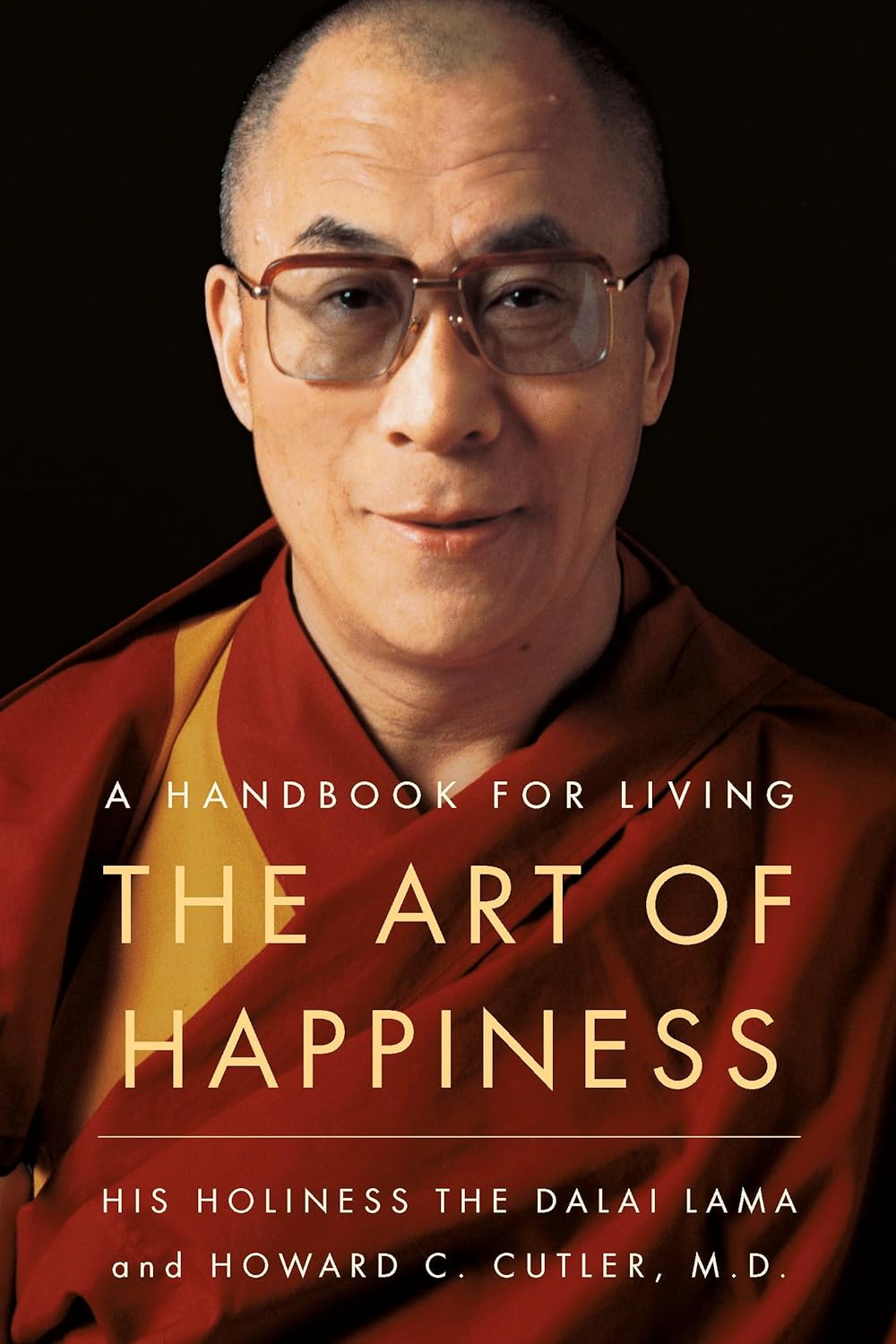
Book One: The Art of Happiness
This book taught me something wild:
Suffering comes from the way we see the world.
Not from what happens to us—but from how we think about what happens.
It helped me understand that I was bringing pain into my own life by expecting people—including my wife—to behave a certain way.
It’s not that we shouldn’t have standards. But when we think there’s only one way to be, and that way is ours?
We become rigid. We become bitter.
And we miss the bigger picture.
The Dalai Lama taught me to look with compassion. To say:
- Where might she be hurting?
- Where might I be missing the point?
- What would love do here?
That shifted the whole fight. It turned war into teamwork.
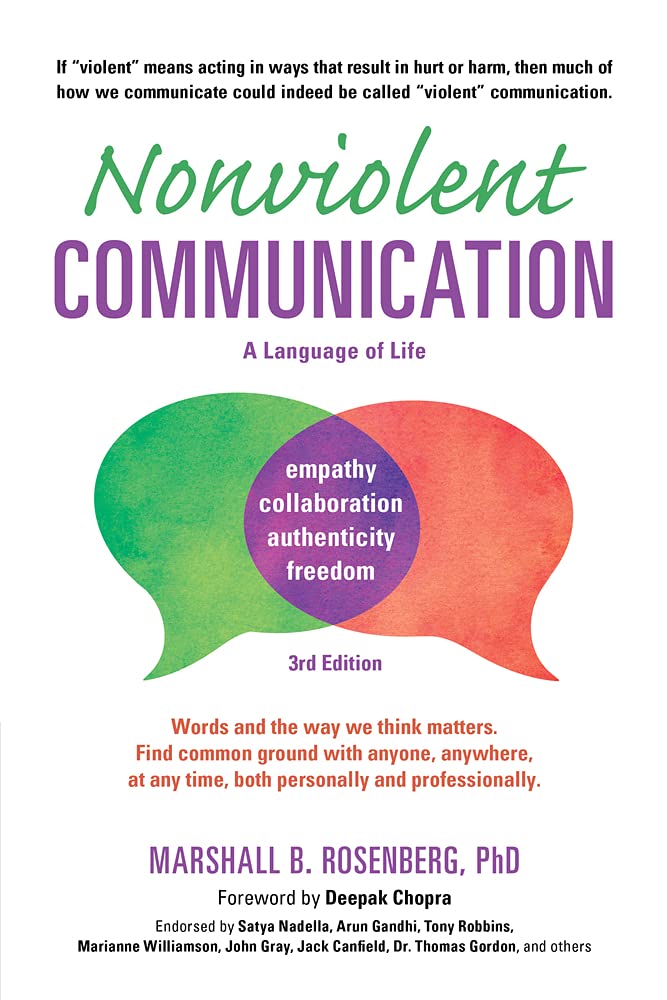
Book Two: Nonviolent Communication
This book is like jiu-jitsu for the heart.
It taught me this key truth:
Every argument hides a need.
When people raise their voices, it’s because they feel unheard.
When they get angry, they’re usually scared.
Instead of saying, “You always do this!”, I started saying:
“When that happened, I felt dismissed. And I really needed to feel respected.”
It changed everything.
Simple words. But not simple thinking.
I wasn’t accusing anymore. I was sharing.
And when I shared with honesty, she shared back.
No more battle lines. No more landmines.
Just two people learning to speak the same language.
The Bigger Picture
Let’s zoom out.
This isn’t just about marriage.
This is about:
- Arguing with your boss
- Fighting with your friend
- Getting triggered by a post online
It’s all the same.
We want to be right. We want it simple.
We say things like:
- They’re dumb.
- They’re wrong.
- They’re the problem.
But let me ask you:
What if you’re only seeing one angle?
What if the person you hate right now… has a story you don’t know?
What if the guy you think is weak… is battling something you’ve never had to face?
This is the heart of being a warrior and a leader:
Not just throwing punches…
But knowing when to listen.
Knowing how to see the other side.
Knowing when to say: “Maybe I don’t know the whole story.”
Simple thinking is easy.
But strong men don’t chase easy.
Strong men chase truth.
And the truth is almost never black or white.
It’s messy.
But if you learn to see it clearly?
That’s when you rise.
Putting It On the Mat
I remember one moment clearly.
It was a Sunday afternoon. I was sitting on our couch. The fight had passed. My wife was in the kitchen, quietly making tea.
I had just finished rereading a section of The Art of Happiness—the part about compassion not meaning agreeing but understanding.
I looked at her, and for the first time in a long time, I saw the little girl in her. The one who had been hurt. The one who just wanted to feel safe. Loved. Respected.
Not the enemy. Not the nag.
Just a human.
I walked over, put my hand on her back, and said something that surprised even me:
“I’m sorry I didn’t see your side sooner.”
She didn’t speak at first. But I saw her shoulders drop. Like a load she didn’t know she was carrying had finally been lifted.
No one “won” that fight.
But we both walked away with something better: understanding.
And that’s what I want for you.
If you’re a young man trying to be strong—trying to lead, love, and live without losing your soul—here’s the deal:
You can’t live a strong life with weak thinking.
You can’t fight real battles with black-and-white answers.
The world is more like BJJ than a street brawl. It’s not just about force. It’s about feeling. Timing. Flow. Perspective.
If you only chase being right, you’ll stay small.
But if you chase being real… being honest… being curious…
That’s when you grow.
That’s when you become the kind of warrior people trust.
The kind of leader people follow.
The kind of man your future family will thank you for becoming.
So today, I challenge you:
Find one place in your life where you’ve been thinking too simply.
Is it politics?
Your job?
A friend you’ve judged too harshly?
Your partner?
Ask yourself:
- What’s the story I’m not seeing?
- Where might they be right, even if I don’t agree?
- What would happen if I chose to understand, instead of win?
That’s what warriors do.
They don’t avoid the hard stuff.
They lean in.
They look deeper.
They see the world—not as right or wrong—but as something worth fighting for.
And when they fall, they get back up… wiser.
The mat always teaches.
Now go put this one on the mat.

Leave a Reply